
Beyond Morning Pages
Creating a Gentle Container for Your Writing

Hello, I’m glad you’re here.
If writing has ever left you feeling more raw than resourced, more exposed than held, this is a different way in.
This is for writers, caregivers, clinicians, and creatives who often hold more than they have space to process, and who want the page to feel like a place of return, not just release.
Free association has long been celebrated in writing practice: write anything, don’t stop, don’t censor! For many, this can feel liberating, a wide-open door into the mind. But for others, especially when the nervous system is activated, it can feel disorganizing, overwhelming, or even unmooring.
In Narrative Healing, we hold a simple question: What happens when we include the body in the act of telling?
This practice is an invitation to move beyond the idea that writing lives only in the mind. Stories live in breath, in muscle, in the subtle signals of safety and threat that move through the nervous system. When we write without awareness of the body, we can sometimes outrun ourselves. When we write with the body, we create a steadier, more compassionate container for what wants to emerge, and what wants to be released.
Why This Matters
From a trauma-informed perspective, expression alone is not always regulating. For some nervous systems, being asked to “let everything out” can amplify activation rather than soothe it.
The Narrative Healing method asks something different:
Rather than outrunning the body, it stays close to it.
Rather than pushing for release, it emphasizes awareness.
Instead of bypassing the nervous system, it includes it.
Instead of asking for free-flowing expression, it asks for a caring and supportive container.
Including mindfulness and somatic practices helps bring expression to the present moment, so the writer can remain present, resourced, and in relationship with what is being written, rather than overtaken by it.
Time as a Container
In Narrative Healing, time itself becomes part of the care. A clear beginning and a clear ending create a container the nervous system can trust.
When we write without limits, the work can sprawl, intensify, or pull us past our own edges. When we write inside a gentle frame of time, something different happens: the body knows it does not have to stay open forever. There is a horizon. There is a landing, similarly to how time supports a meditation practice, yoga practice. One of the key components of a supportive practice is adhering to a time and place.
A timer can say: You will not be here alone. You will not be here endlessly. You will be here, with care, for this small and meaningful stretch of time.
Writing as self-care is not about going deeper at any cost. It is about going as far as you can and returning safely.
Narrative Healing Prompt
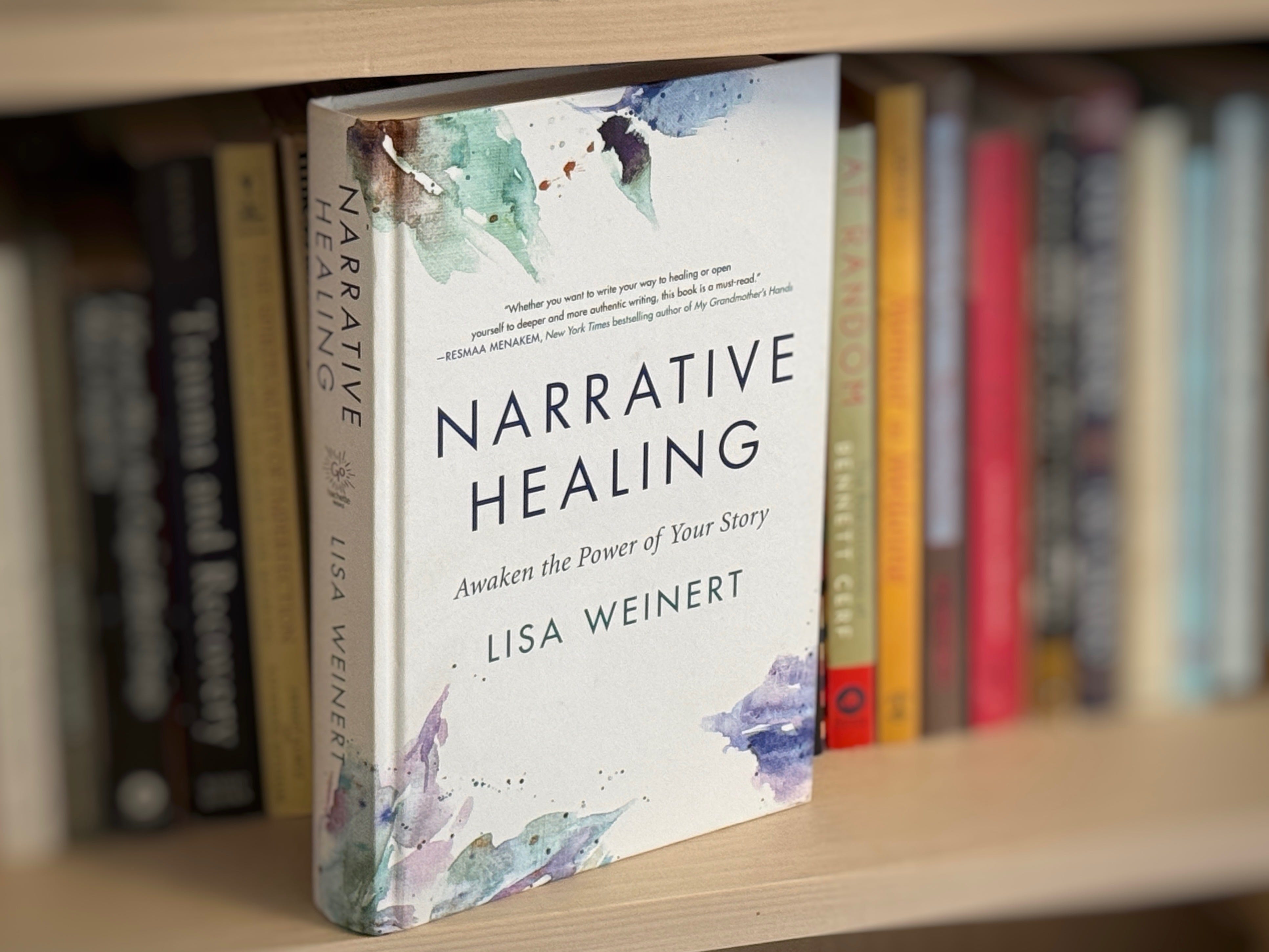
This prompt comes from my book, Narrative Healing, where I explore writing as a long-term, embodied practice.
Set an Intention:
Writing is like yoga, or meditation, or playing the piano, gardening, or really any other practice; you enjoy it more and receive more benefits the more you do it. This is one way of thinking about what it means to create an intention. Setting an intention before you do something magnifies its impact and your likelihood of success.
Another, more spiritual way to think about this is that setting an intention creates a seal around your practice and separates the work from the grind of daily life.
Let’s take a moment to pause and set an intention for today’s practice.
Take a new breath and listen for guidance and direction. What brings you here today? Do you have a purpose or goal? is there a story you’re ready to share? Is there something you want to achieve or learn? Are you growing? Is there someone you would like to devote your practice to? Focus on something within reach, something you can almost smell and taste.
Write it: Write your intention.
Set a timer for 10 minutes.
Choose one physical anchor:
your breath
your feet on the floor
your hands touching the page or keyboard
A Place to Return
So much of modern writing culture frames the page as a place to “empty out” to mine, purge, or extract our inner lives for meaning or productivity. Narrative Healing offers a different orientation: the page as a place of relationship.
I’m writing this as I pack my bag to head to the Kripalu Center for Yoga & Health, where I’ll be holding a Care for the Caregiver retreat. This is the practice I carry into those rooms, and the one I return to myself.
If you leave this page feeling even a little more resourced than raw, my book, Narrative Healing, and our Salon writing community offer a place to return and keep practicing.
I look forward to writing with you.
With care,
Lisa
Needed this. Thank you.