
The Courage to Share
What happens when people feel safe enough to be heard

Dear Friends,
Over the past several weeks, I have found myself thinking deeply about what helps people feel safe enough to share. Not polished enough. Not “good” enough. Not important enough. Just willing enough.
I sit here preparing for my favorite in-person gathering of the year: our annual Open Mic Night at James Lenox House, a senior residence on the Upper East Side of Manhattan.
This week, I’ve been reviewing my roster and planning outreach with my team leaders, Ilene, Beverly, and Jeff. Together, we’ve been asking important questions: How do we help people feel welcome enough to participate? How do we create a space where people feel safe enough to share?
The flyer reads (importantly, food & refreshments served):
“All welcome. No experience needed. New or old, funny or heartfelt.”
I first had the privilege of working with this population during my first year of social work school and was fortunate enough to continue offering monthly Narrative Healing writing groups called Writing for Wellbeing this past year.
Each month, our group gathers for a simple but intentional practice. We begin with grounding and mindfulness exercises designed to help participants settle into the body and arrive in the room. From there, I offer a creative writing prompt followed by time to write privately. Participants are invited, but never required, to share aloud.
The goal is not polished writing or disclosure, but creating conditions where people can reconnect with themselves and one another through creative expression. Again and again, I have watched people who once insisted they were “not writers” begin arriving each month with folded pages in their pockets, ready to share.
A reliable outcome of our gatherings is laughter, connection, and a deepening sense of belonging.
At last year’s Open Mic, one resident brought in a poem folded carefully into her pocketbook. Another read a joyful piece about their first slice of pizza in New York City. One resident shared memories of growing up in a small town in Germany, while another reflected on losing a parent early in life.
Afterward, people lingered beside one another in the hallway long after the event ended, as if something long locked inside the building had quietly opened. I watched neighbors begin conversations after hearing one another’s stories. I watched moments of humor, grief, tenderness, and recognition ripple through the room.
Research on aging, storytelling, and expressive writing supports much of what we witness each month. Studies on life review and reminiscence practices suggest that reflecting on and sharing life experiences can support emotional well-being, strengthen identity and memory, reduce loneliness, and foster meaning and connection in older adulthood.
But what feels especially meaningful to me about this work is the creative freedom in the room. There is no “right” story to tell and no pressure to shape experience into something polished or profound.
Sharing your writing—especially later in life— requires courage. Not because the writing needs to be perfect, but because being witnessed by other people is vulnerable. Practicing sharing — and listening — strengthens the trust and empathy that communities depend on. Before people can build stronger communities, they often need spaces where they feel safe enough to speak and be heard.
So how do we locate the story we are meant to share?
Perhaps the story is smaller than we think.
Writing Prompt
“I still remember…”
A first slice of pizza.
A hallway conversation.
A parent or loved one you still miss.
A place you once loved.
A joke that still makes you laugh.
The story does not need to be polished or profound. It only needs to feel alive to you.
Sometimes the stories that stay with us most are the ones that make another person feel a little less alone.
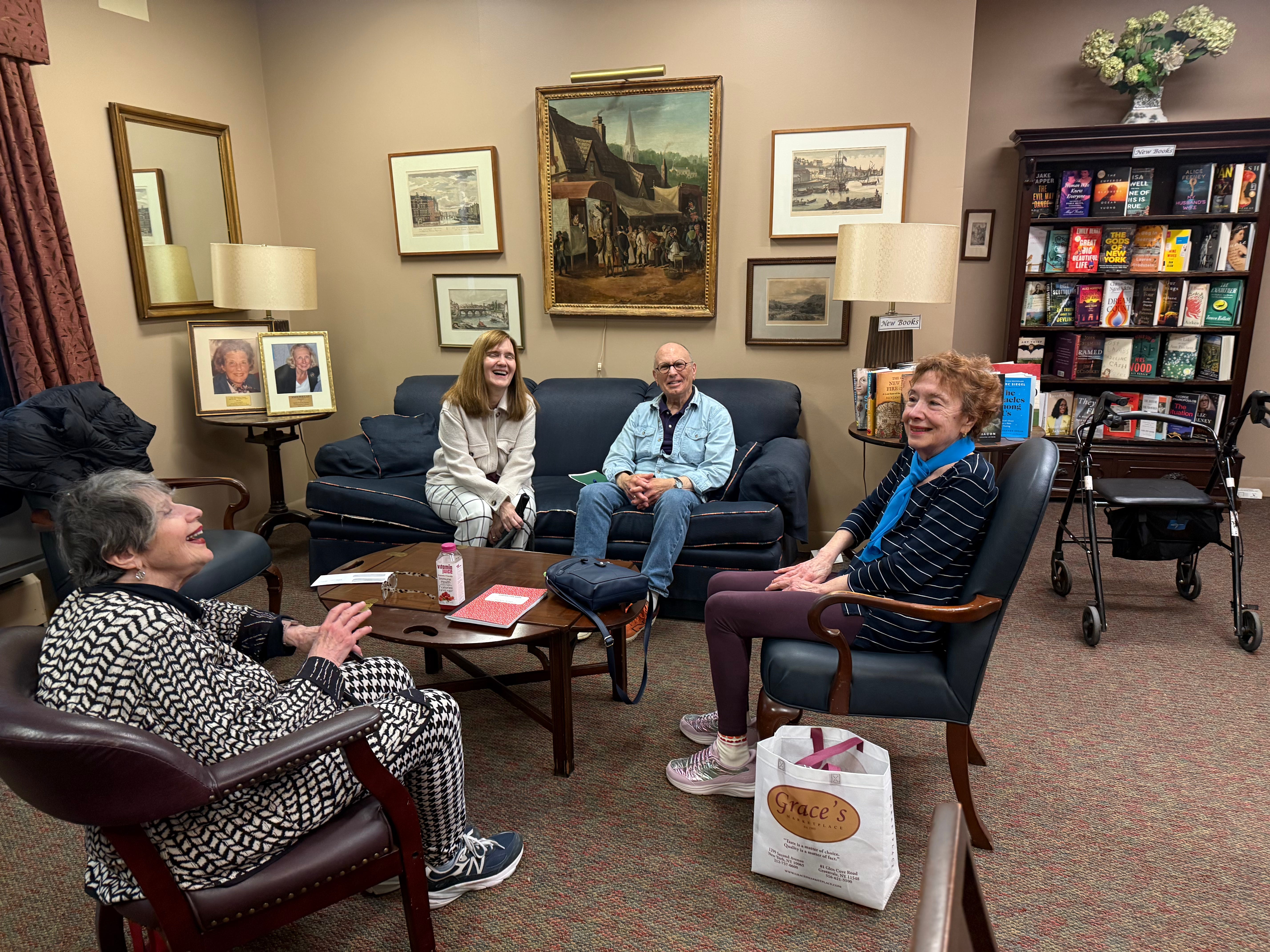
James Lenox Team Leaders
Thanks Lisa; when is this occurring please?
Love this. Thanks Lisa!